
Article: 2 Carat Lab Grown Diamond Engagement Rings: Size, Price and Quality Guide
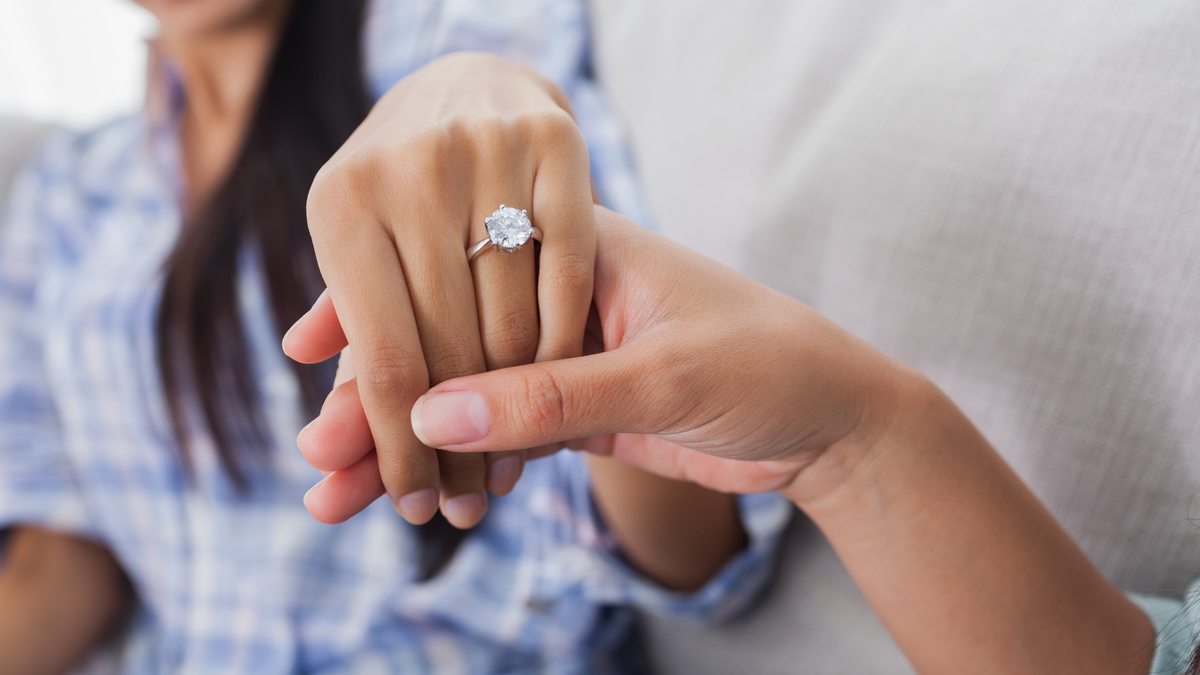
2 Carat Lab Grown Diamond Engagement Rings: Size, Price and Quality Guide
A two-carat lab-grown diamond can be the starting point for an engagement ring with a distinctive presence. Carat measures weight, while the diamond’s shape and proportions influence how large it looks. This guide explains how to compare dimensions, laboratory documentation, settings and current quotes so you can choose a ring that fits your preferences and budget.
How big is a two-carat diamond?
Two carats weigh 0.4 grams. There is no single diameter that every two-carat diamond shares: dimensions depend on shape and proportions.
For a round brilliant, compare the diameter measurements on the stone’s documentation. For an oval, pear or other elongated shape, compare length and width as well. Then consider the setting and how the finished ring looks on your hand. Weight alone cannot tell you that.
What affects the price?
Compare current quotes for individual diamonds rather than relying on a price attached only to carat weight. Ask what the quote includes: the center stone, setting, accent stones and any customization.
Keep the quoted specifications and laboratory documentation beside each price. That makes it easier to understand what you are comparing and which differences matter to you. Our engagement ring budget guide can help you prepare a comfortable spending range.
Lab-grown diamonds are produced using growth methods such as CVD and HPHT. Read how lab-grown diamonds are made for an introduction to those processes.
Compare cut, color, clarity and weight
- Cut: Look at how the diamond handles light, along with its proportions, polish and symmetry. For a round brilliant, review the issuing laboratory’s cut assessment when available. Table and depth percentages alone do not establish how well a diamond will sparkle.
- Color: Compare diamonds in the metal color you prefer. The setting can influence how color appears, and your preference matters more than choosing a grade by a fixed rule.
- Clarity: Review the laboratory assessment and look at the stone without magnification as well. The size, location and visibility of inclusions matter; a grade alone does not tell you exactly what you will notice in everyday wear.
- Carat: Compare actual dimensions as well as weight. Two diamonds of the same carat weight can look different in size and proportion.
For more on appearance, explore which diamond cut sparkles the most.
Understand the laboratory document
Ask to see the diamond’s laboratory report or quality assessment and review what that particular document evaluates. Laboratories can use different reporting systems: GIA’s current laboratory-grown diamond service uses Premium or Standard quality assessments. Where a report number is inscribed on the girdle, ask to have it checked against the document.
Keep the documentation with your purchase records. Our guide to insuring a lab-grown diamond engagement ring covers questions to discuss with your insurer.
Choose a setting you enjoy wearing
- Solitaire: Puts the focus on one center stone.
- Pavé: Adds small stones along the band.
- Halo: Surrounds the center stone with smaller stones.
- Bezel: Uses a rim of metal around the stone’s edge.
Compare the profile, band width and feel of different designs. At The Golden Gem, customization options include 14K or 18K white, yellow or rose gold, or platinum. Other metals may be available depending on the ring model. Our engagement ring styles guide introduces the choices.
Hardness does not mean indestructibility
Diamond rates 10 on the Mohs scale of scratch hardness, but hardness is different from resistance to impact. A diamond can still chip or fracture. Protect your ring from hard knocks and have its setting checked regularly.
Two-carat lab-grown diamond FAQs
How big does a two-carat diamond look on the hand?
Two carats describes weight, not one fixed diameter. Compare the stone’s length, width and depth, then consider how its shape and setting look on your hand.
Is a lab-grown diamond a real diamond?
Yes. Identifying whether a diamond formed naturally or was grown in a laboratory requires appropriate testing; appearance alone is not enough. Ask for laboratory documentation identifying the stone’s origin rather than relying on a basic tester result.
Will I recover the purchase price if I sell it?
A future resale price is not guaranteed. Ask about any written trade-in or buyback terms before purchasing, and choose the ring for your enjoyment rather than assuming you will recover its purchase price.
Can I combine natural and lab-grown gemstones?
The Golden Gem offers natural and lab-grown choices for the center gemstone and gemstones used in customization. Discuss the combination you want and what is available for your design with a Bridal Consultant.
Explore your engagement ring options
Whether you are shopping from Lakewood or right here in Golden, talk with a Bridal Consultant about the shapes, settings and diamond options you would like to compare. If you have a particular two-carat diamond in mind, contact us before your appointment to discuss availability.
Book an appointment at The Golden Gem, 1111 Washington Ave, Suite 215, Golden, CO 80401. Visits are by appointment. For questions, call 720-761-5956.

